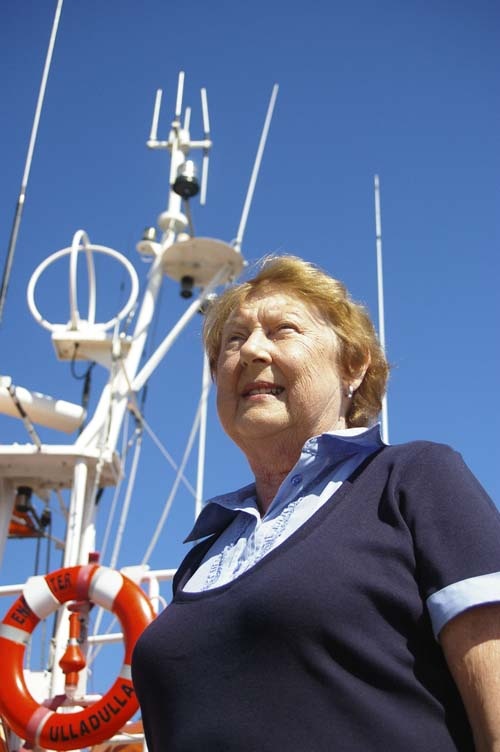
IT’S been 50 years since a young Marion Adamson stepped aboard a ship and into a world that would revolutionise music in the UK.
The Mollymook retiree is a pioneer of Radio Caroline, England’s illegal offshore radio station made famous with the release of the movie The Boat That Rocked.
And rock it did!
“Those were wild, fun times,” Mrs Adamson said.
“We were free, we were rebellious, it was the ’60s and anything was possible.”
A radio music programmer in Sydney, Marion travelled to London at the age of 25 and through her connections ended up on board the Mi Amigo the very first Radio Caroline ship that operated in international waters off the coast of Essex.
The group of young rebel rockers began broadcasting on Easter Sunday, 1964 with the Rolling Stones’ single ‘Not Fade Away’.
The station, with its mix of modern music from the likes of the Stones, Beatles and Dusty Springfield and a series of hip programs, became an overnight success with seven million listeners tuning in across the UK in the first week.
“We had no idea there would be such a phenomenal response,” Mrs Adamson said.
“But with no commercial radio permitted in England at the time we broke new ground and had 22 million listeners after the first month.”
Commercial radio was illegal in the BBC-dominated UK, so the off-shore radio operators were soon dubbed the radio pirates and developed a cult following that still exists today.
“It was totally illegal and the government did all it could to sabotage us, but we got around that by getting our supplies sent via Spain and being paid through Panama.
“It was illegal to supply the ship with food or records or to advertise or provide financial backing to the station and we paid no taxes or royalties to the British Government,” she said.
“Because it was also illegal to board the ship, we would catch a supply boat out into international waters and jump across in the middle of the North Sea.”
“It could be pretty hairy at times, especially during a force eight gale, but it was a real adventure,” she said.
The first woman on board, Marion worked on Radio Caroline for two years, travelling back to her base in London every two weeks.
She said the pirates received a fabulous response from the public and opened the floodgates for commercial radio and rock music in the UK.
“At the time the BBC was the only radio station and it was very staid and conventional.
“We were out there, fun and the whole thing rocked – that’s what the people wanted in the ’60s.
“We changed the future of music in Britain and the world.”
Marion said the Mi Amigo sunk during heavy seas in 1980, but Radio Caroline still operates today – with a licence and on land.
Many of the original Caroliners still keep in contact and share memories of good times on board in the 1960s when dreams came true.
 Katrina Condie Media & Marketing